THE TRUTH ABOUT CBD, CANNABIS & TOURISTS IN PUNTA CANA
Search the internet for:
“Can tourists bring CBD or cannabis products to Punta Cana?”
You will usually get a frightening answer:
Cannabis is illegal. Dominican drug laws are strict. Do not bring it.
The first part is true.
But that doesn't answer the question many travelers are really asking:
What actually happens in real life?
And that is where the story becomes much more interesting.
FIRST, LET'S TELL THE TRUTH ABOUT THE LAW
Dominican law prohibits the possession and consumption of controlled drugs, and Dominican Customs lists drugs and psychotropic substances among prohibited or restricted items for travelers entering the country.
So this article is not saying marijuana is legal in the Dominican Republic.
It isn't.
The question is different:
How is that law actually being enforced against ordinary tourists carrying small personal-use cannabis or CBD products?
LOOK AT THE ARRESTS THAT ACTUALLY MAKE THE NEWS
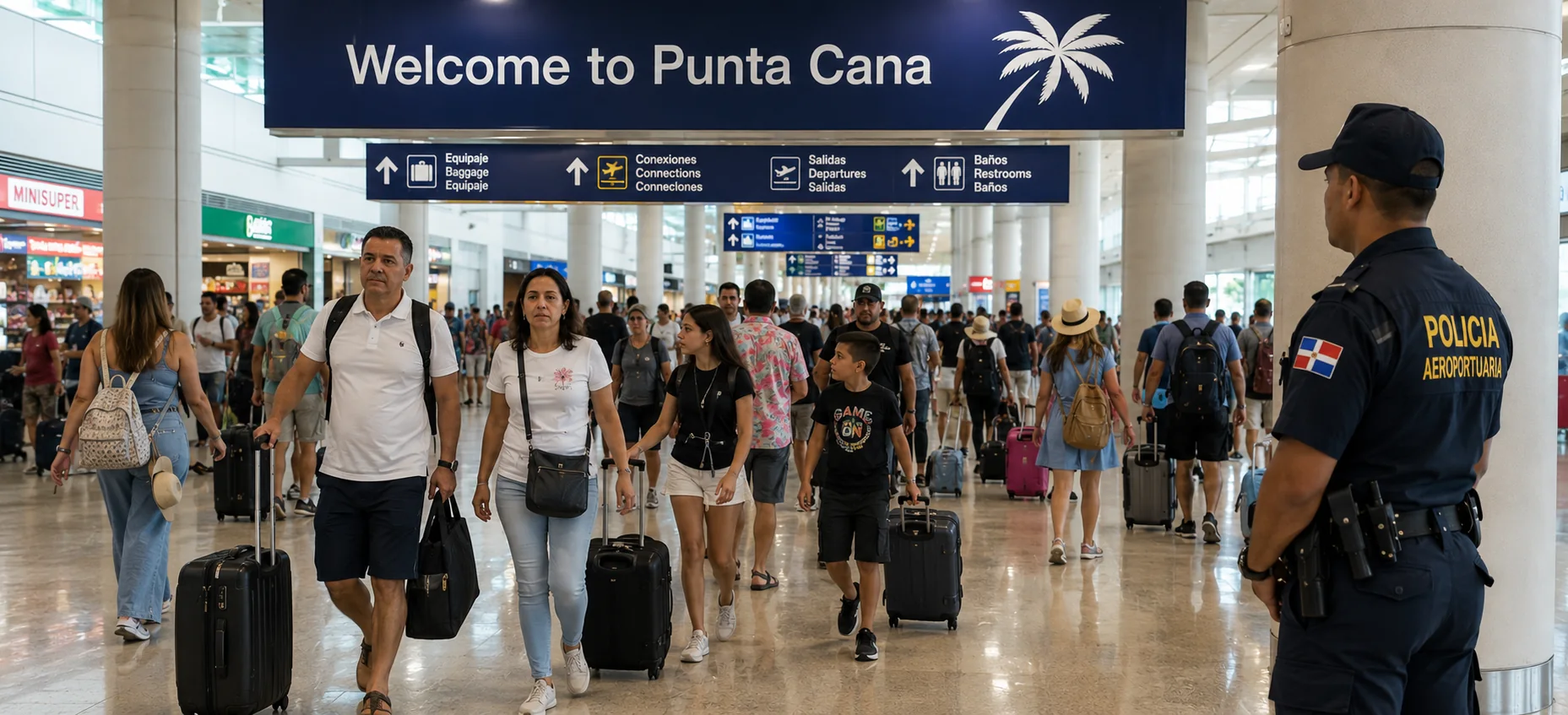
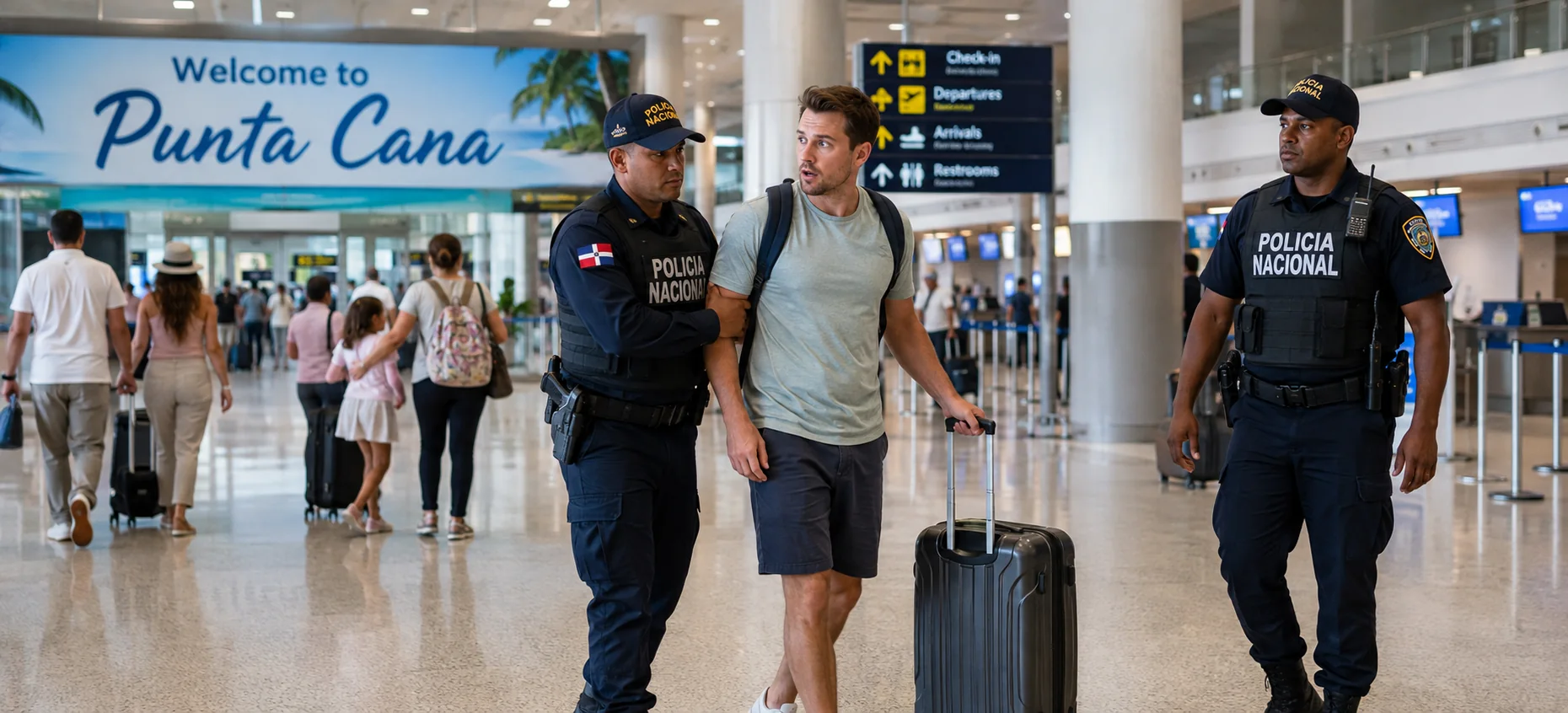
In March 2025, a 25-year-old Canadian woman was arrested arriving at Punta Cana International Airport.
That sounds frightening if you stop reading at the headline.
But keep reading.
Authorities didn't report finding a CBD gummy.
They didn't report finding a small bottle of CBD oil.
They didn't report finding one vape cartridge.
They found 23 packages of marijuana concealed inside her luggage.
Authorities described the case as part of their operations against international drug trafficking.
In January 2024, an American arriving from Charlotte was arrested at Punta Cana Airport.
Again, what was allegedly found?
24 packages of marijuana.
Authorities described that case as a frustrated international narcotics-trafficking operation.
Another Punta Cana investigation involved 38 packages of marijuana, along with hundreds of cannabis vapes and gummies connected to an alleged trafficking network.
Other reported cases involved 79 packages, 90 packages and even larger quantities.
Do you see the difference?
These aren't stories about somebody going on vacation and forgetting a CBD gummy in a backpack.
These are drug-trafficking cases.
NOW ASK THE OTHER QUESTION
Where are the comparable headlines saying:
“Canadian tourist arrested in Punta Cana with one CBD gummy”?
Where are the reports saying:
“American vacationer prosecuted for one small bottle of CBD oil”?
Where are the statistics showing thousands—or even hundreds—of ordinary tourists being arrested for tiny personal-use cannabinoid products?
After searching specifically for those types of cases, reliable public statistics separating small personal-use tourist possession from drug trafficking are extremely difficult to find.
That doesn't prove an arrest could never happen.
It doesn't make possession legal.
And it certainly isn't permission to bring cannabis into the Dominican Republic.
But it does expose an important distinction that many travel articles leave out:
The law on the books and the enforcement pattern visible in the public record are two different questions.
“BUT CANNABIS IS LEGAL WHERE I LIVE”
For many travelers, cannabis has become completely normal.
Canada legalized recreational cannabis nationally.
Many U.S. states have legalized recreational or medicinal cannabis.
CBD and hemp-derived products are sold openly throughout much of North America.
That cultural change may help explain why travelers sometimes don't think of a gummy, oil, cream or vape the same way previous generations thought about marijuana.
But crossing an international border changes the situation.
Even Canada—where recreational cannabis is legal domestically—warns its own citizens that taking cannabis across the Canadian border remains illegal, regardless of whether cannabis is legal at the destination.
SO WHAT IS THE REAL ANSWER?
Here it is:
Cannabis remains illegal under Dominican law.
Dominican authorities absolutely enforce drug-trafficking laws.
The arrests publicly reported around Punta Cana repeatedly demonstrate that.
But those same reports overwhelmingly involve large quantities, concealed packages, alleged trafficking networks and international smuggling operations.
That is not the same factual situation as an ordinary tourist possessing a tiny amount of a commercially manufactured cannabinoid product.
And publicly available information does not give us a reliable number showing how frequently that specific type of tourist is arrested.
That's the part of the conversation travelers deserve to hear too.
ILLEGAL DOESN'T AUTOMATICALLY MEAN “NEVER ENFORCED.”
And rarely seeing an enforcement action doesn't mean:
“It's legal.”
Those are two different things.
Around the world there are laws that are enforced aggressively, laws that are enforced selectively and laws whose enforcement depends heavily on the circumstances.
Travelers should understand the difference between:
What the law says
and
what available evidence tells us about enforcement.
Then they can make their own decisions.
WE'LL LEAVE YOU WITH THIS
Millions of people travel through the Dominican Republic.
The cannabis arrests that repeatedly make the news at Punta Cana Airport involve people carrying dozens of packages and suspected international drug trafficking.
Meanwhile, finding documented modern cases involving ordinary vacationers arrested specifically for a single CBD gummy or similarly tiny personal-use product is remarkably difficult.
What does that tell you?
We'll leave that part for you to decide.
But don't misunderstand the message:
Cannabis is still illegal in the Dominican Republic, and carrying it across an international border carries legal risk.
We believe travelers deserve something better than scare tactics.
They deserve the law, the documented cases, the context—and the opportunity to make up their own minds.
#PuntaCana #DominicanRepublic #CBD #Cannabis #PuntaCanaTravel #TravelTruth #KnowBeforeYouGo #PuntaCanaTourism #CaribbeanTravel

Join the Conversation
3 comments · Share a tip, ask a question, or just say hi.
Leave a Comment
No account, name, or email needed — we'll give you a fun display name like "Sunny Flamingo 42". Just pass the quick security check below and your comment will appear after a quick review.